David Icke
The Ownership Wars: Who Owns YouDavid Icke appears in the book less as a developed participant in the narrative than as a representative figure in its argument about right-wing conspiracy culture. The text identifies him with a paranoid explanatory style that converts social domination into a mythology of extraterrestrial rulers, while insisting that his theories obscure the political and economic structures actually responsible for exploitation.
Identity and Political Position
The book places David Icke on the far right and groups him with Alex Jones, Henry Makow, and other professional conspiracy theorists who, in its judgment, sell sensational stories to audiences willing to treat implausible claims as hidden truth. Its explicit stance is antagonistic: the authors describe themselves as left-wing and therefore opposed to the right-wing positions associated with Icke. They reject the idea that criticism of such theories merely serves an establishment agenda, noting that a commentator who labels dissenters “shills working for the establishment” treats disagreement itself as proof of complicity.
Icke is therefore used as a political contrast rather than as a neutral source of information. The book distinguishes its own account of power from his by arguing that elite domination should be analyzed through capitalism, class, wealth, and state power rather than through a secret nonhuman race. His theories become an example of how conspiratorial narratives can claim to expose hidden control while redirecting attention away from identifiable political forces.
The Reptilian Conspiracy
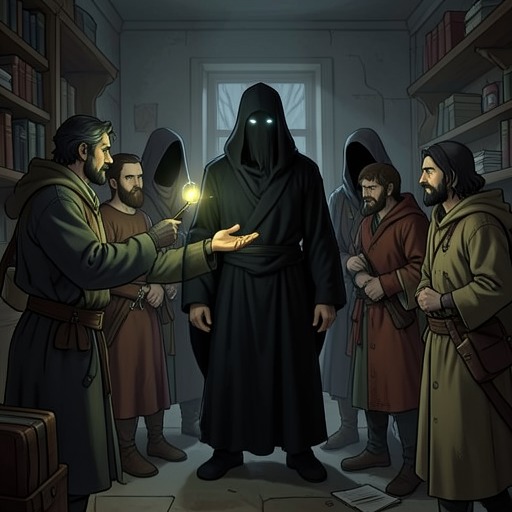
The central feature associated with Icke is his claim that humanity has been genetically manipulated by the Babylonian Brotherhood, a hybrid race of human and extraterrestrial reptilians also linked in the book’s account to the Illuminati. The narrative assigns these beings a long historical presence: they are described as descendants of reptilians from the constellation Draco, living in subterranean caverns and appearing in different traditions as the Anunnaki, fallen angels, or Watchers.
According to the account summarized in the book, Icke holds that the reptilians entered into repeated breeding programs with humans. The first programs supposedly occurred between 200,000 and 300,000 years ago, while a later program took place about 7,000 years ago. The resulting hybrids, allegedly more Anunnaki than human, are said to control the modern world through a continuation of the Babylonian Brotherhood. Icke explains the word “Aryan” in this theory as meaning white and includes most Jews among the population he imagines to have originated in the Caucasus.
The theory also gives the extraterrestrial rulers a technological mechanism for controlling perception. The rings of Saturn and the Moon are described as reptilian constructions that broadcast a “five-sense prison,” an artificial sense of self and world that humans mistake for reality. In this model, the visible social order is only a surface generated by manipulation, while the true rulers remain hidden behind a sensory and ideological apparatus.
Shapeshifting and the Construction of Belief
The book records Icke’s account of how his belief developed through encounters with people who claimed to have seen humans change into nonhuman forms. He describes this as an ancient phenomenon of shapeshifting and gives the reptilian its basic appearance: a scaly humanoid with reptilian rather than humanoid eyes. The theory thus combines personal testimony, ancient mythology, occult interpretation, and speculative anthropology into one continuous explanation of history.
The book also attributes the theory to earlier sources. It reports that Icke adapted the reptilian idea from Zecharia Sitchin’s The 12th Planet and combined it with material from Credo Mutwa, a Zulu healer. Sitchin’s Anunnaki were said to have come to Earth for precious metals, whereas Icke changed the object of their interest to monatomic gold. The book emphasizes that this substance cannot exist as Icke describes it, since only gases can exist in a monatomic state, yet the theory assigns it extraordinary effects: increasing the nervous system’s capacity ten thousandfold, enabling the processing of vast amounts of information, accelerating trans-dimensional travel, and allowing reptilians to change from reptilian to human form.
These details matter to the book’s characterization of Icke because they show conspiracy as an accumulative system. Each borrowed myth, alleged witness report, scientific-sounding term, and historical connection is made to support the next layer of the story. The result is a totalizing explanation in which political leaders, ancient gods, extraterrestrials, racial categories, and technologies of perception become parts of one hidden mechanism.
Relation to They Live and Elite Power
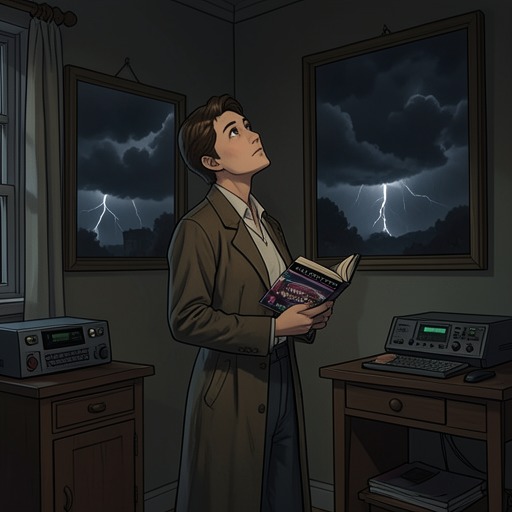
The book connects Icke’s ideas to John Carpenter’s film They Live, arguing that the film anticipated much of his conspiracy narrative. They Live depicts a shadowy elite that has engineered economic collapse, ruined the working class, and brought ordinary people close to enslavement by the rich. Its ruling class consists of aliens who conceal their appearance and use subliminal messages to make people spend money, reproduce, and accept the status quo.
The film’s hidden signal provides a particularly close parallel to Icke’s emphasis on concealed control. In They Live, an underground Resistance attempts to hack the signal; when its broadcaster is destroyed, humans everywhere see the aliens’ true forms and the film ends abruptly. The book says that Icke reportedly described the film as a documentary rather than a movie, presenting this response as evidence of the film’s importance within his worldview.
The book nevertheless rejects the interpretation that the film’s aliens represent Jews or the Illuminati. It states that Carpenter identified them instead with yuppie followers of Ronald Reagan and that the film is a savage denunciation of right-wing politics, unrestrained capitalism, and the super-rich. Carpenter is quoted as saying that They Live concerns yuppies and unrestrained capitalism and has nothing to do with Jewish control of the world. This distinction is decisive: the same imagery of hidden rulers and mass manipulation can be read as a critique of capitalist power or as an antisemitic and extraterrestrial conspiracy, depending on the explanatory framework imposed upon it.
The book further notes that Slavoj Žižek used They Live in the 2012 documentary The Pervert’s Guide to Ideology. In Žižek’s reading, the film’s special sunglasses function as a critique of ideology: they reveal the message beneath propaganda, glamour, and advertising, exposing an invisible order that sustains the appearance of freedom. The book uses this interpretation to separate ideological criticism from Icke’s literalized mythology. Both accounts imagine perception as manipulated, but one directs attention toward ideology and social power, while the other directs it toward reptilian rulers and occult bloodlines.
Narrative and Ideological Significance
Icke’s role in the book is to embody a rival explanation of domination. The book repeatedly argues that right-wing conspiracy theorists mistake or deliberately substitute fantasy for politics. It contrasts Icke’s hidden reptilian hierarchy with its own account of the Ownership Class, predatory capitalism, and the protection of wealth from state intervention. Where Icke imagines a global fascist New World Order advanced by reptilian humanoids, the book asks why that alleged order would not instead be understood through the interests of capital and the wealthy.
This contrast also appears in the book’s treatment of the far right’s relationship to authority. It associates right-wing politics with obedience to powerful rulers, billionaire plutocrats, religious domination, and hostility toward government regulation, while also describing right-wing movements as seeking to weaken the State so that capitalists, religions, and right-wing families can act without restraint. Icke’s conspiracy theory is folded into this larger indictment: it is treated as another form of right-wing false consciousness, one that appears rebellious because it denounces hidden elites but ultimately obscures the material operations of elite power.
The book’s evaluation is therefore uncompromising. David Icke is not presented as an investigator who uncovers a suppressed reality, but as a disreputable theorist whose stories of reptilian hybrids, Draco, the Illuminati, and sensory imprisonment turn political criticism into sensational mythology. His importance lies in the sharpness of the boundary he marks. Against the book’s left-wing analysis, conspiracy does not deepen the understanding of oppression; it replaces visible structures with an extravagant enemy and makes the real machinery of wealth, class, and capitalism harder to see.